
The external dimensions of a folding cargo box in a fully unfolded and loaded state, namely length x width x height (1200 * 1000 * 1000, 1200 * 1000 * 860, and 1200 * 1000 * 760 in millimeters). These specifications are mainstream models designed based on standardized pallet sizes (such as 1200 * 1000mm European standard pallets) in the logistics and warehousing industry, aiming to optimize the matching between cargo boxes and pallets, shelves, and transport vehicles, and improve space utilization and operational efficiency.
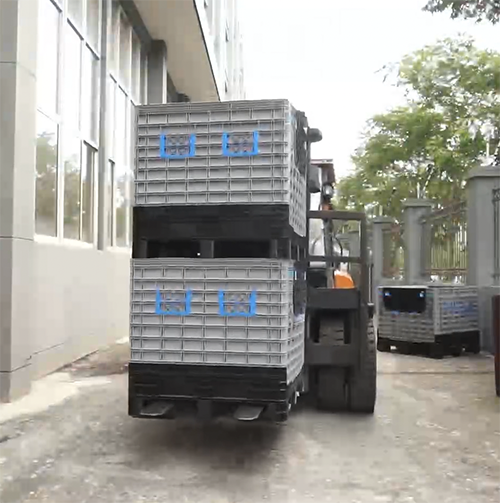
Interpretation of core specification parameters
The specific interpretation of each specification code is as follows:
1200 * 1000 * 1000mm: This is a large capacity cargo box with a height of up to 1 meter, suitable for loading lightweight items with loose volume or high height. Its advantage lies in the full utilization of vertical space, but attention should be paid to the stability during stacking and ensuring that the load-bearing capacity of the contents is within a safe range.
1200 * 1000 * 860mm: This is a medium height cargo box that balances capacity and ease of operation (such as visibility or arm reach when manually picking goods). It is one of the most versatile specifications and is widely used in production line material distribution, warehousing sorting, and other fields.
1200 * 1000 * 760mm: This is a relatively low cargo box with the advantage of good stability and a lower center of gravity when stacking, making it particularly suitable for storing heavy or high-density items. At the same time, the lower height makes it easier for operators to observe and retrieve the goods inside the box.
Considerations for choosing specifications
When choosing the specifications of a folding cargo box, the following factors should be considered comprehensively:
- Characteristics of goods: including volume, weight, shape, and stacking requirements of the goods. Light foam goods can choose higher specifications to improve space utilization; For heavy goods, it is advisable to choose lower specifications to ensure safety.
- Matching storage and transportation equipment: Ensure that the size of the cargo box matches the internal dimensions of the pallets, shelf heights, handling equipment (such as forklifts), and transportation vehicles (such as containers and trucks) used to avoid space waste or inability to load.
- Ergonomics: Consider operating frequency and methods. In scenarios with frequent manual operations, the height of the cargo box should be convenient for employees to work safely and effortlessly.
- Standardization and Interchangeability: Within the same logistics system, try to unify the specifications of cargo containers as much as possible, facilitate stacking, management, and circular sharing, and improve overall efficiency.